Dairy Operations
The Dairy Parlor: Rotational Flow
Modern dairy infrastructure is designed around the biological rhythm of the herd and the mechanical efficiency of the milking equipment. The primary objective is to minimize stress on the animal while maximizing throughput and hygiene. Institutions like Wageningen University continually study cow traffic in various housing configurations.
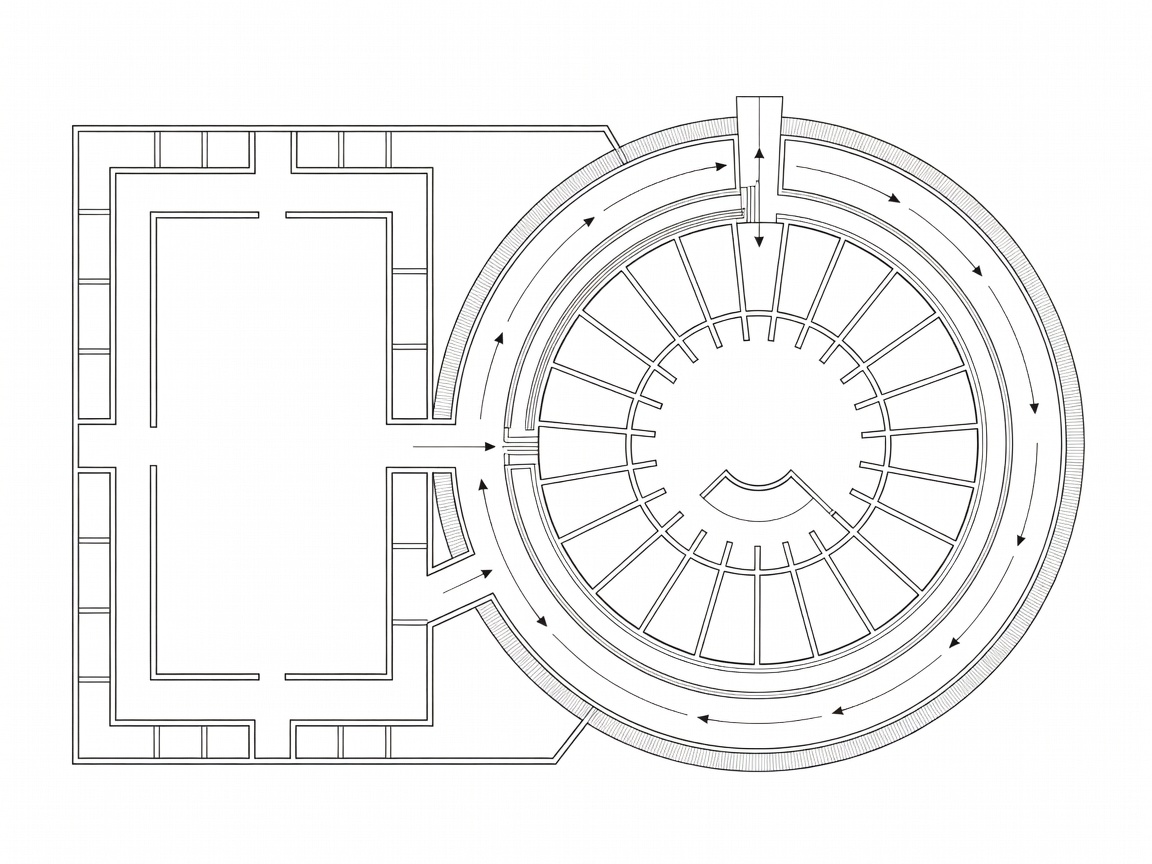
Freestall Barn Architecture
Freestall barns allow cattle, such as Holsteins, to move freely between resting cubicles (stalls) and feeding alleys. Proper ventilation, grooved concrete flooring for traction, and automated scraper systems to manage manure are strict requirements for municipal zoning boards overseeing agricultural water runoff.
Milking Infrastructure Configurations
| System Type | Layout Configuration | Operational Capacity |
|---|---|---|
| Herringbone | Cattle stand at an angle; udder access from a sunken pit. | Medium to Large Herds |
| Rotary (Carousel) | Cows step onto a continuously moving circular platform. | High Throughput / Commercial |
| Robotic (e.g., Lely Astronaut) | Voluntary milking systems utilizing laser guidance. | Variable (Optimized per robot unit) |
The introduction of systems from manufacturers like DeLaval and Lely has shifted the paradigm from scheduled human-led milking to voluntary, cow-led interaction, altering the layout of the modern barn to accommodate autonomous flow.